South Sudan will go to polls. Refugees aren’t invited — Opinion
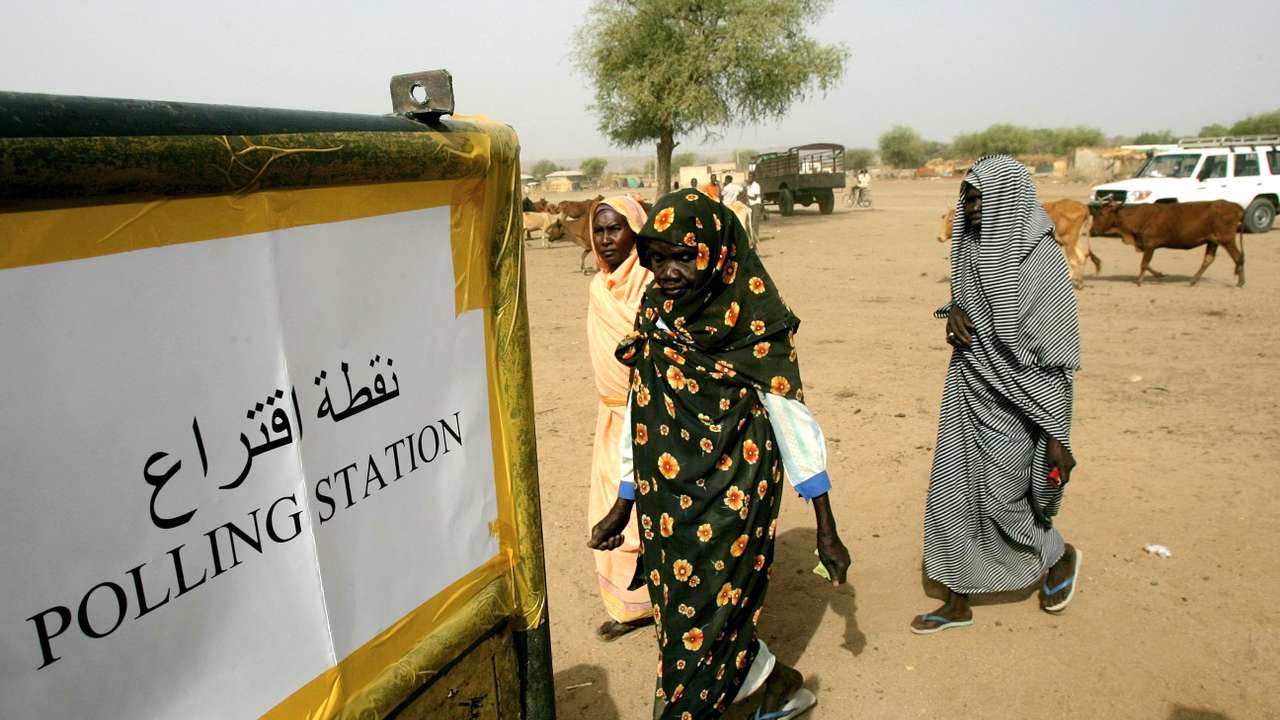
South Sudan has postponed elections multiple times since 2015. For its estimated 12.5 million people, the country’s first general election since independence should draw optimism. Instead, a cloud of uncertainty hovers over the elections, scheduled for December 22, 2026.
The sceptics outnumber the optimists. The calls to postpone the polls on account of the country’s volatile political environment are growing by the day.
Pelle Enarson, the European Union’s Head of Delegation in South Sudan, argues that the circumstances prevailing in the country will not facilitate a free and fair vote.
“From a technical point of view, it won’t be possible to have elections in December if preparations do not start immediately,” Enarson says.
Speaking of preparations, the election date was announced merely six months in advance – a timeline analysts say is too short. Two months in, there are concerns ranging from inadequate voter education to complaints over political party registration, making the situation increasingly fragile.
RECOMMENDED FOR YOU
Imvepi’s unrest is more than an election dispute — Opinion
“Critical prerequisites for the conduct of credible, peaceful and inclusive elections remain unmet,” George Aggrey Owinow, the Chairperson of Reconstituted Joint Monitoring and Evaluation Commission (RJMEC), notes in a briefing to the United Nations Security Council.
Generally, there is no political consensus in the world’s youngest sovereign country, and opposition groups like the United People’s Alliance (UPA) have accused Salva Kiir’s government of violating the 2018 agreement, brokered by the Intergovernmental Authority on Development (IGAD).
The Agreement on the Resolution of the Conflict in the Republic of South Sudan (R-ARCSS) halted a devastating civil war that claimed more than 400,000 lives and contributed to one of the world’s worst humanitarian crises.
Violence persisted despite what some analysts describe as a “dangerous marriage of convenience” between two uncompromising power contestants, Kiir and Machar, and this unpredictable environment, some caution, cannot facilitate a credible process. Others fear the elections could escalate government-opposition fighting, as already witnessed in some parts of Equatoria, Jonglei, Upper Nile and Unity states.
Civil society groups are calling for a postponement, arguing that dialogue between the main stakeholders is needed to build trust. They say this would give the government more time to address the gaps in the country’s institutions, including the weaknesses in the existing electoral law.
Despite the 2018 truce, instability persisted. As of June 2023, approximately 2.4 million – about 19% of the country’s population – had been displaced to neighbouring countries, mainly Uganda and Sudan, the majority living in refugee camps and settlements.
While participation is fundamental to any democratic process, many refugees are unlikely to be able to exercise their right to vote. As of now, no clear plan to facilitate their inclusion has been announced publicly.
Uganda hosts roughly a million South Sudanese refugees who, according to recent reports, are eager to vote. For these people, some of whom have spent decades away from home, the election presents a chance to take part in shaping their country’s future.
RECOMMENDED FOR YOU
Zambia Roundup: Election irregularities, Kafwaya death probe and ZCCM-IH’s K4.92bn loss
“We are ready to participate in the elections because every citizen has the right to choose their leaders,” says Toha Martin, a refugee living in Adjumani, north-western Uganda. His view fairly represents the desire of many refugees in the region, dreaming of a thriving nation they can one day return to.
If refugees are excluded, the government risks undermining its own legitimacy and national unity, because a significant portion of the population will have no voice.
The onus is on President Salva Kiir and his political allies to prove they can place national interest over political manoeuvring by managing the many points of contention shrouding the 2026 elections in a fair and transparent manner.
Over the years, South Sudanese refugees have demonstrated extraordinary resilience in the face of pressing challenges. Excluding them would render that resilience politically irrelevant.
Ultimately, regional bodies including IGAD and the East African Community (EAC) could help mediate between the transitional government and opposition parties to de-escalate tensions and push for a more inclusive electoral process.
RECOMMENDED FOR YOU
Milei warns against socialism, says Argentina ‘sank into poverty’
The article solely represents the views of Simpson Muhwezi, a Ugandan freelance writer and development practitioner.
